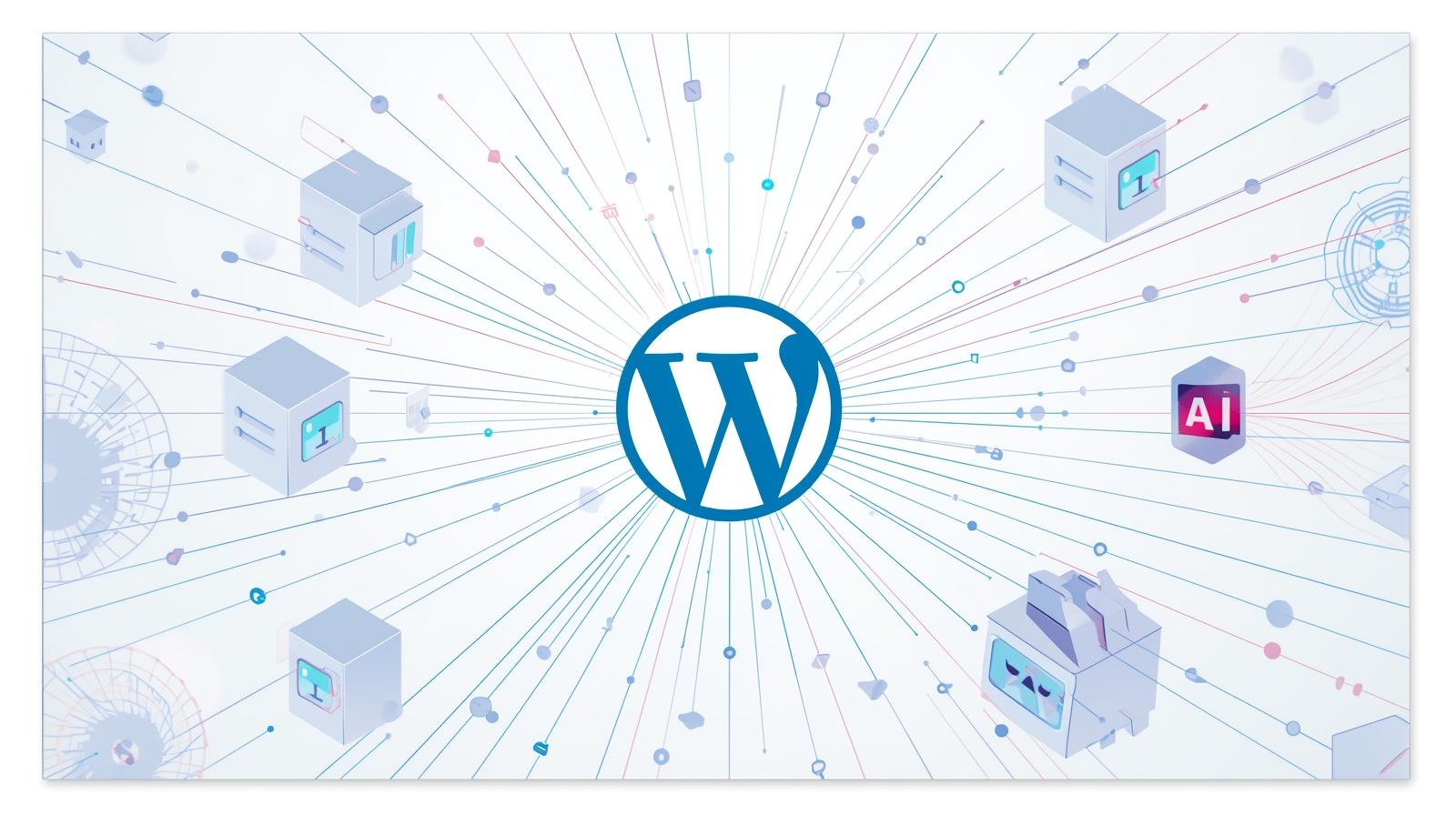

As WordPress continues evolving to support more intelligent and automated workflows, the Abilities API has emerged as a foundational technology in the platform’s AI Building Blocks initiative. The Abilities API was introduced in WordPress 6.9 and provides a standardized way for WordPress core, plugins, and themes to register and expose their capabilities – or “abilities.”
Table of Contents
What Is the Abilities API?
The Abilities API creates a central registry where functionality (called abilities) is registered with a consistent structure that’s both machine-readable and human-friendly. Each ability represents a distinct unit of functionality with defined inputs, outputs, permission rules, and execution logic.
Instead of relying on fragmented functions, custom AJAX handlers, or undocumented REST endpoints, developers can list and inspect capabilities through a unified interface. This standardization improves discoverability and interoperability across the WordPress ecosystem. [link]
Why It Matters for AI and Automation
While the Abilities API itself does not automatically add AI features to WordPress, it lays the groundwork for future integration with AI systems and automation tools. The API makes capabilities discoverable and accessible, which means:
- AI assistants and automation tools can understand what actions a WordPress site can perform.
- Workflows can be built programmatically using standardized interfaces.
- Plugins and themes can interoperate more consistently.
This is a major shift: instead of custom integration code for every plugin, external systems can query a site’s abilities and act accordingly. [link]
How It Works: Core Concepts
The official documentation defines key Abilities API concepts as follows:
Ability – A distinct piece of functionality with a unique identifier, human-readable label, descriptive metadata, and validation rules.
Registry – A central store (WP_Abilities_Registry) that holds all registered abilities and provides methods for querying them.
JSON Schema Validation – Inputs and outputs are defined using JSON Schema to ensure data integrity when abilities are executed.
Because everything is registered in a central system, capabilities become more predictable and easier to expose through REST or other interfaces. [link]
AI Building Blocks: Where Abilities Fit In
The Abilities API is part of the broader AI Building Blocks initiative, which aims to make WordPress more AI-ready and interoperable with external tools. Other elements of the initiative include the PHP AI Client SDK and adapters such as the MCP Adapter, which connect WordPress with AI protocols.
When combined, these components allow external systems (including AI assistants like ChatGPT, Claude, or Gemini) to:
- discover abilities a site supports
- invoke those abilities securely
- build higher-level workflows based on site functionality
This doesn’t yet mean every WordPress site will have full AI features out of the box – but it does mean WordPress is now intelligible to machines in a standardized way. [link]
Real-World Use Cases
AI-Assisted Tasks – An AI assistant could discover a site’s abilities and perform actions such as creating or updating posts, generating summaries, or auditing content. [link]
Automation Tools – Developers can write automation workflows that use registered abilities to perform multiple steps programmatically. [link]
Plugin and Theme Interoperability – Abilities can help plugins and themes expose their capabilities in a consistent way, reducing custom integration work. [link]
Where This Fits in WordPress 7.0 and Beyond
While the Abilities API was introduced in WordPress 6.9, it remains a core part of the ongoing roadmap toward more extensible and AI-friendly infrastructure. Its standardization of capabilities prepares the platform for deeper, more robust integrations – whether through future core features, plugins, or third-party AI tools. [link]
Conclusion
The WordPress Abilities API represents a foundational shift in how functionality is registered, discovered, and used across the platform. By providing a standardized, centralized registry of capabilities, WordPress makes it far easier for developers, automation tools, and AI systems to understand and interact with sites. While AI features are still emerging, the Abilities API lays the groundwork for a future where WordPress is not only content-driven, but also intelligent and extensible in an interoperable ecosystem.
FAQ.
Don’t see your question? Drop us a message. We’re always happy to help.
What is the WordPress Abilities API?
The Abilities API is a core WordPress API that provides a standardized way to register and expose site capabilities in a machine-readable format.
Is the Abilities API an AI feature?
No. It does not add AI directly, but it enables AI and automation tools to interact with WordPress in a consistent and secure way.
When was the Abilities API introduced?
The Abilities API was introduced in WordPress 6.9 as part of the AI Building Blocks initiative.
How does the Abilities API relate to WordPress 7.0?
While introduced earlier, the Abilities API plays a key role in the WordPress 7.0 roadmap by enabling future AI-assisted and automated workflows.
Who benefits most from the Abilities API?
Plugin developers, agencies, and businesses building scalable or automated WordPress solutions benefit the most.